
Vertical Phonograph Lathe For Recording Mastered Sound R.I.A.A AUTOMATIC C7 – C8
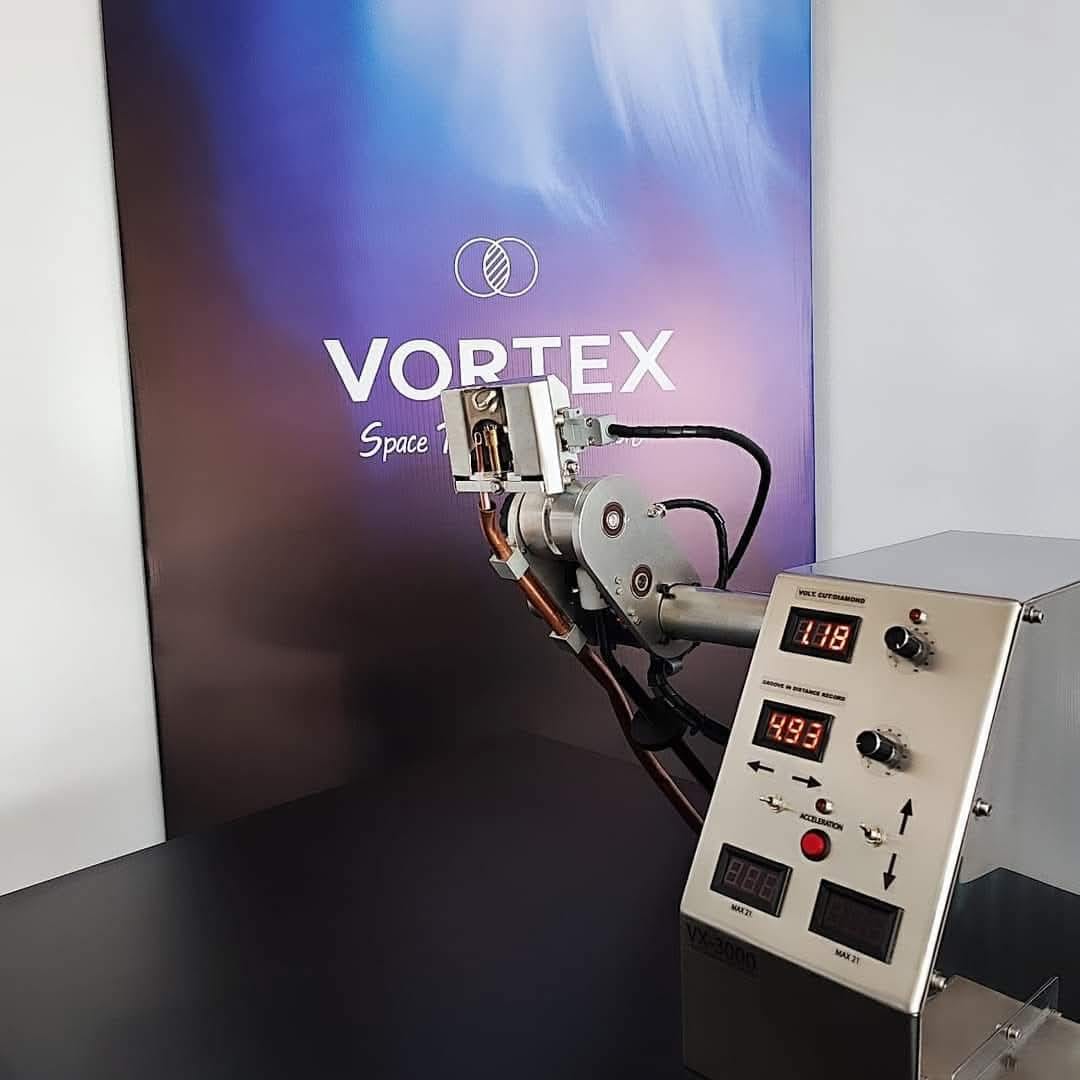
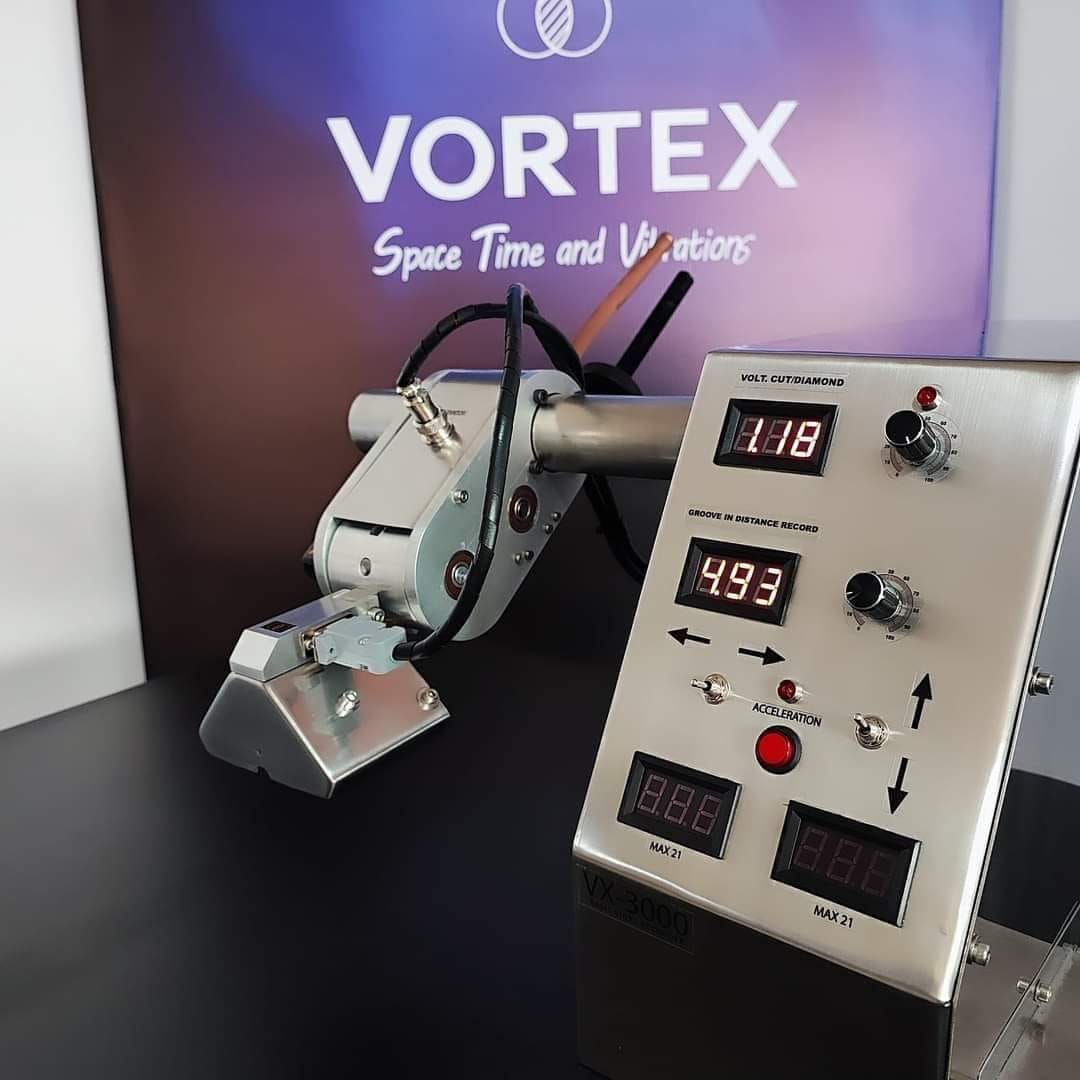
C6V4 – VX3000
Dear interested parties and future customers: We know how important it is for you to have one of our automatic lathes, so we invite you to meet us in person. This way, you can operate the machine with your own hands, see the discs with your own eyes, and hear them with your own ears. You can carry the machine in your luggage, or Jonathan Mejía can travel anywhere in the world to deliver and install the machine in your home.
Estimados interesados y futuros clientes: Sabemos lo importante que es para ustedes tener uno de nuestros tornos automáticos, por eso los invitamos a conocernos en persona. Así, podrán operar la máquina con sus propias manos, ver los discos con sus propios ojos y escucharlos con sus propios oídos. Pueden llevar la máquina en su equipaje o Jonathan Mejía puede viajar a cualquier parte del mundo para entregarla e instalarla en su hogar.

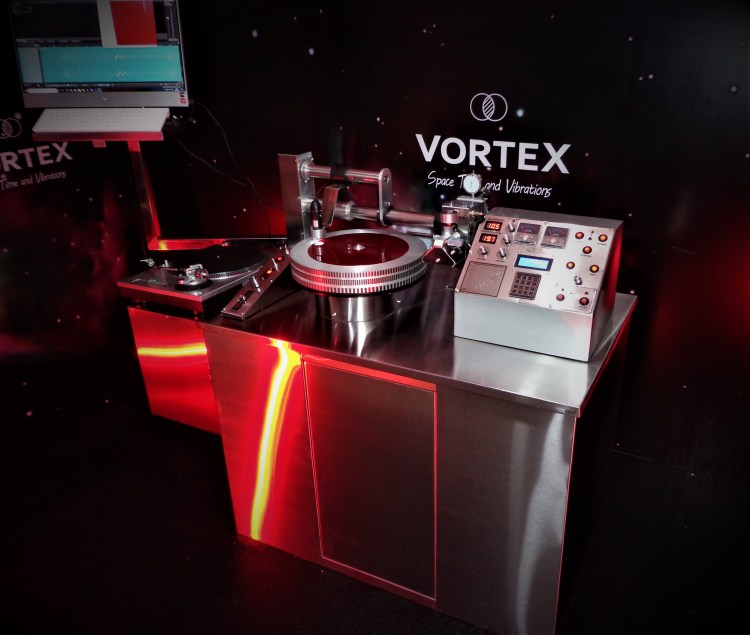


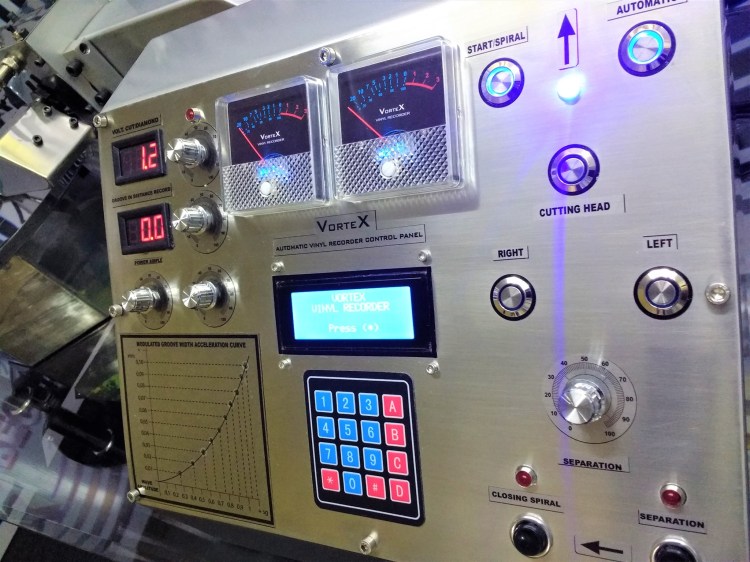

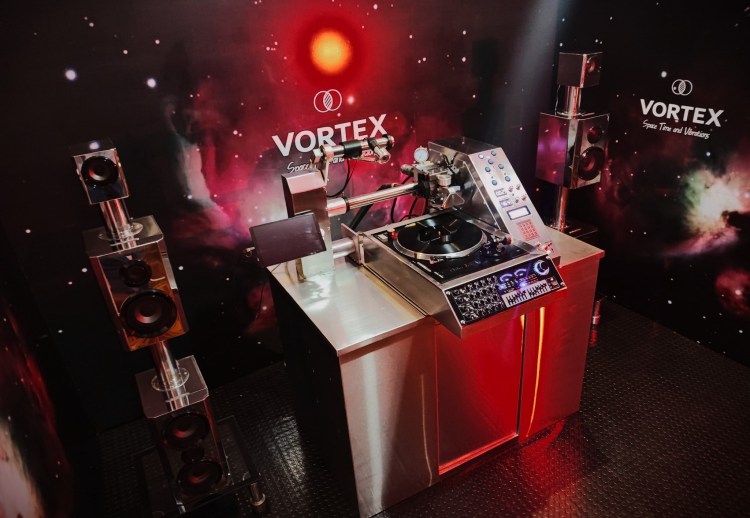
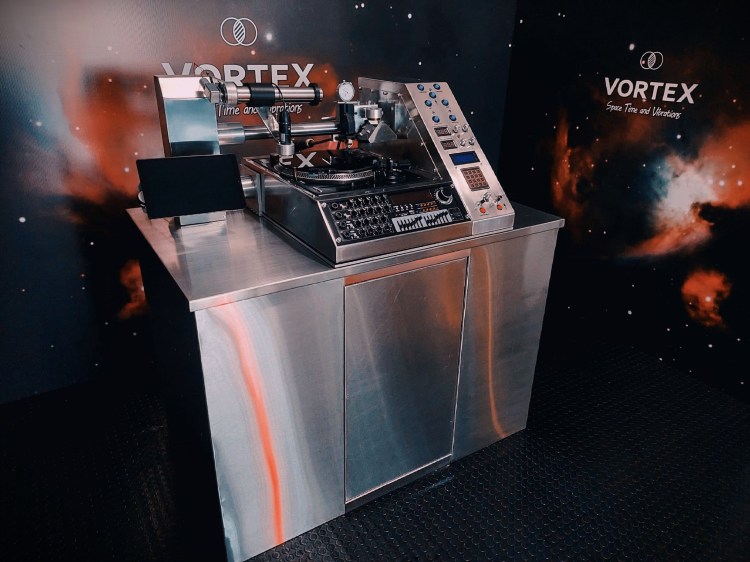
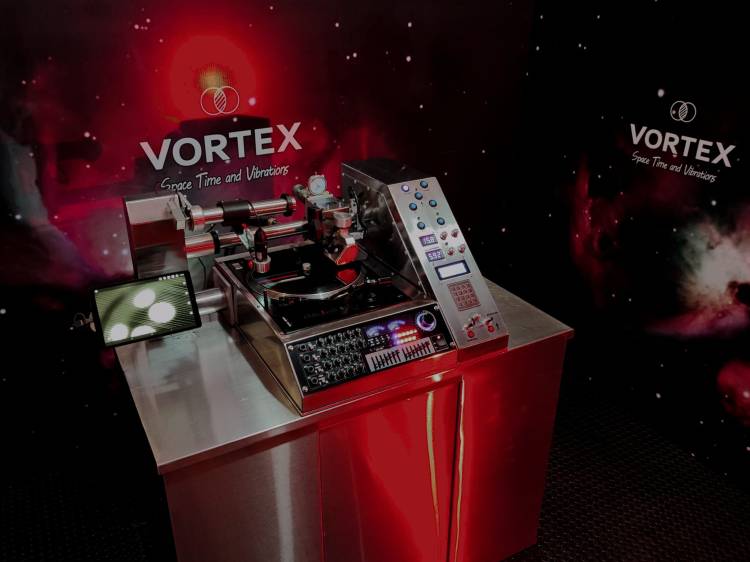
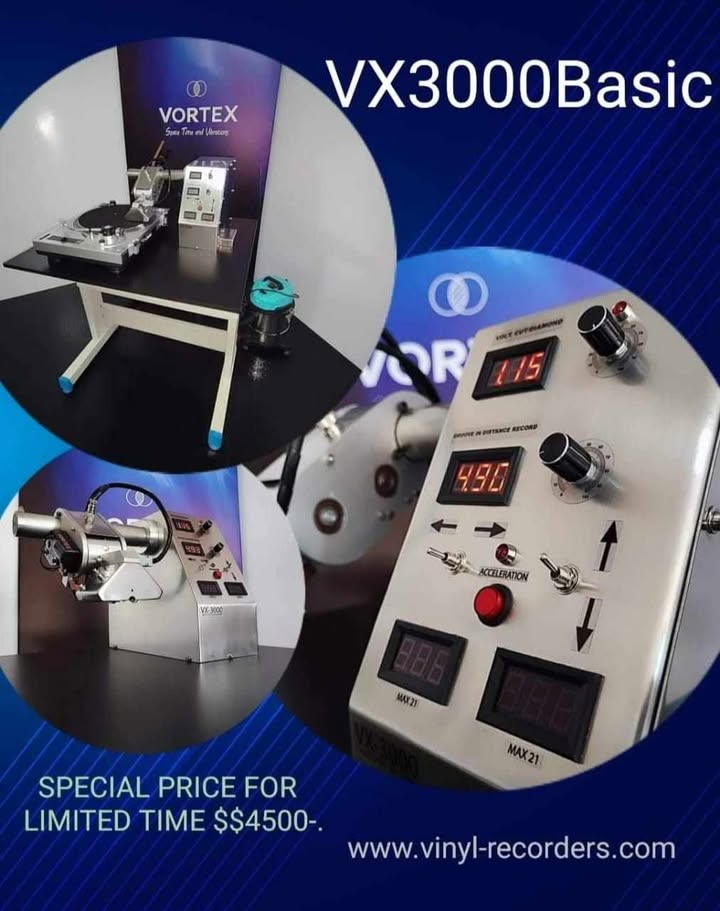
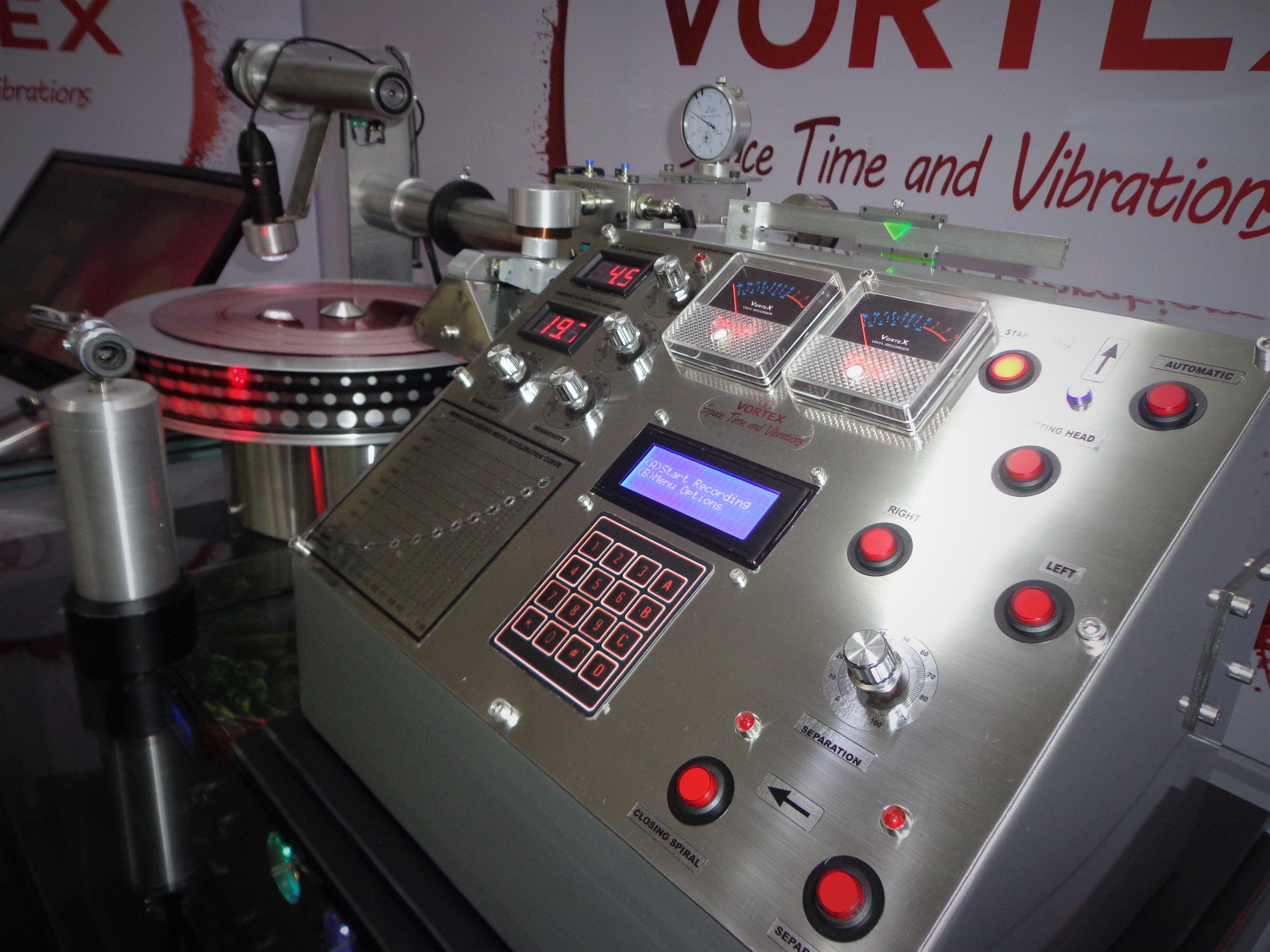
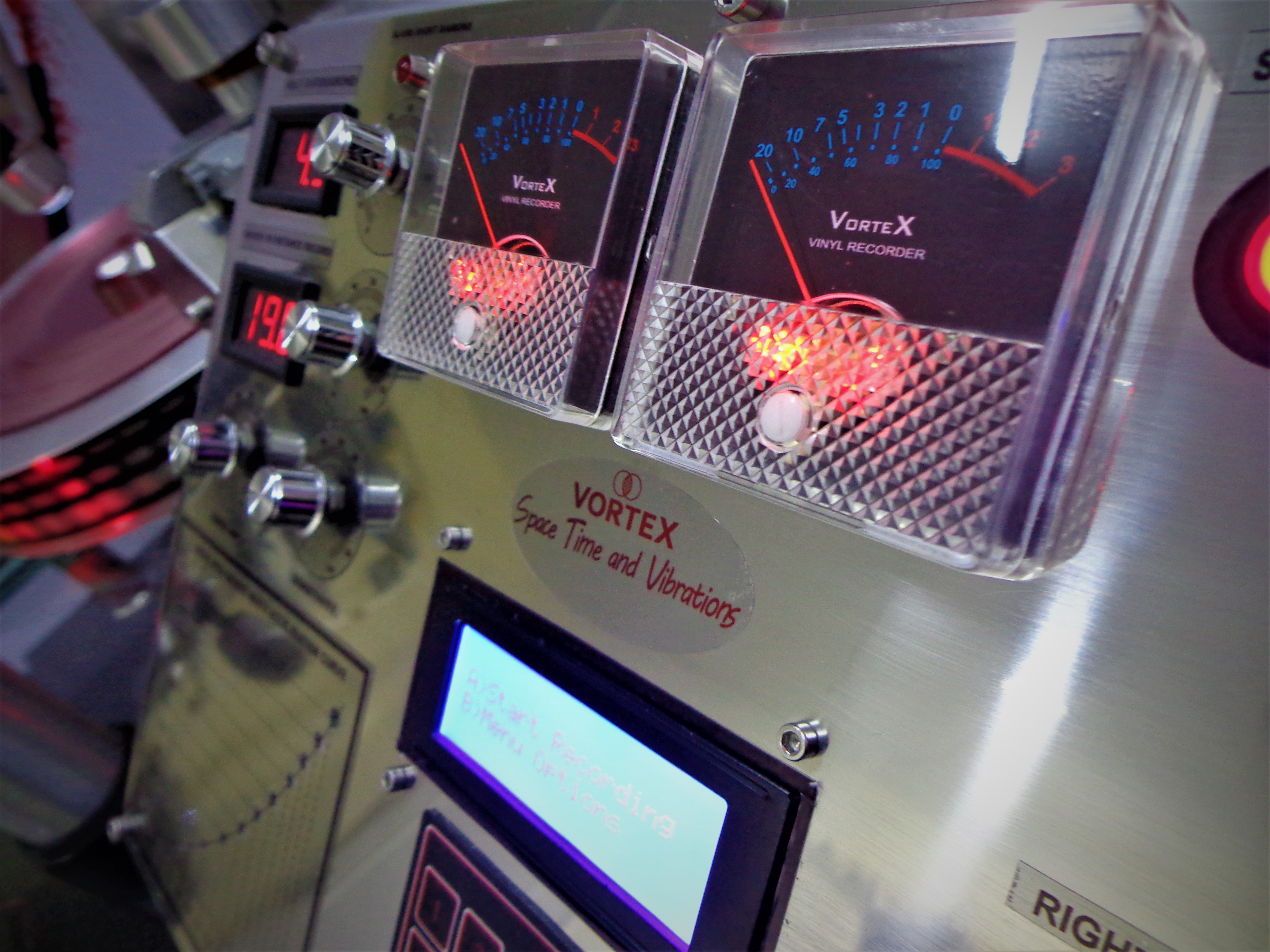
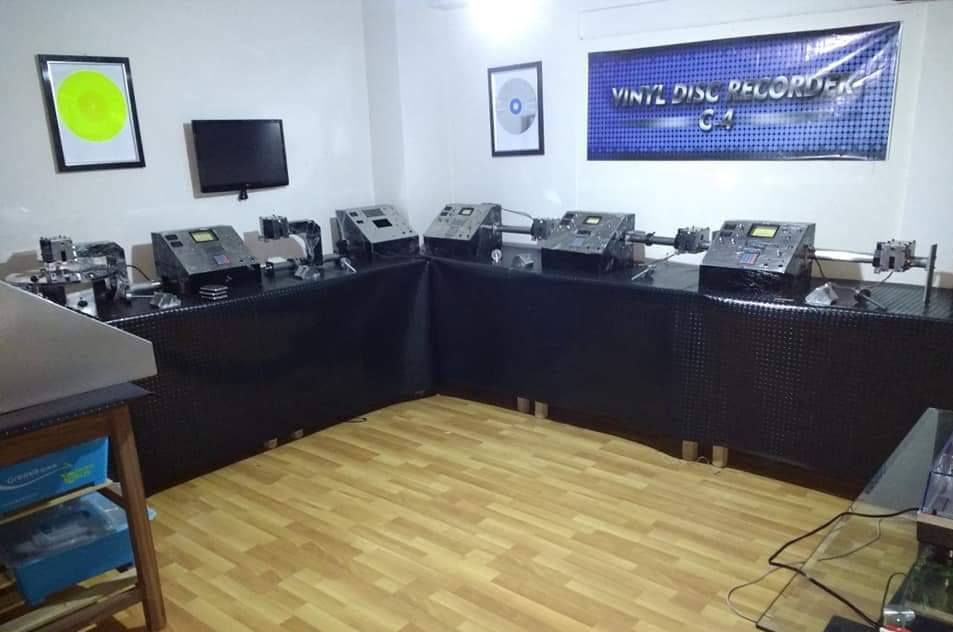
VORTEX C-6 V3, AUTOMATIC 16-inch turntable where you can cut 7 ″ 10 ″ 12 ″ 14 “16” discs directly from your computer or any source of origin
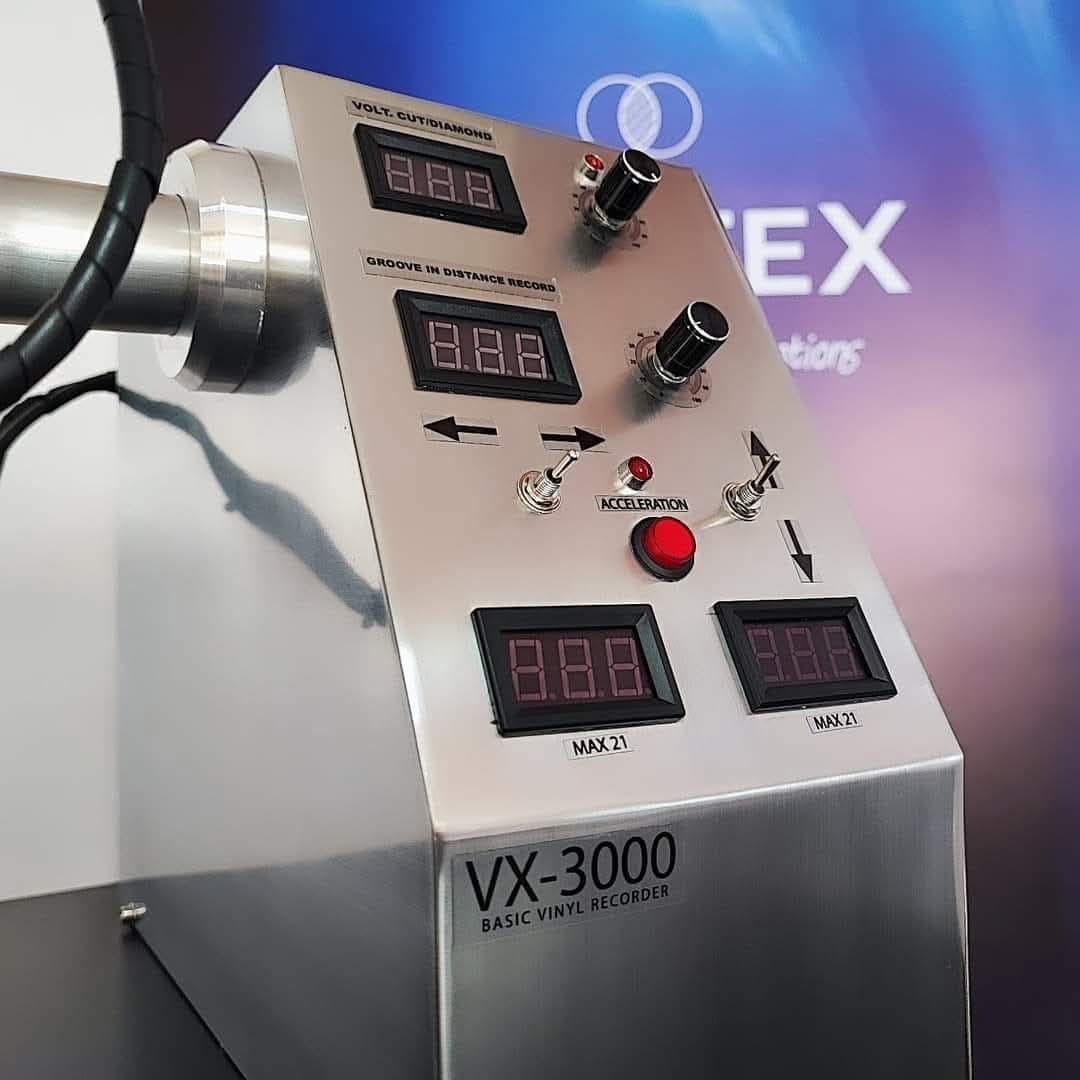
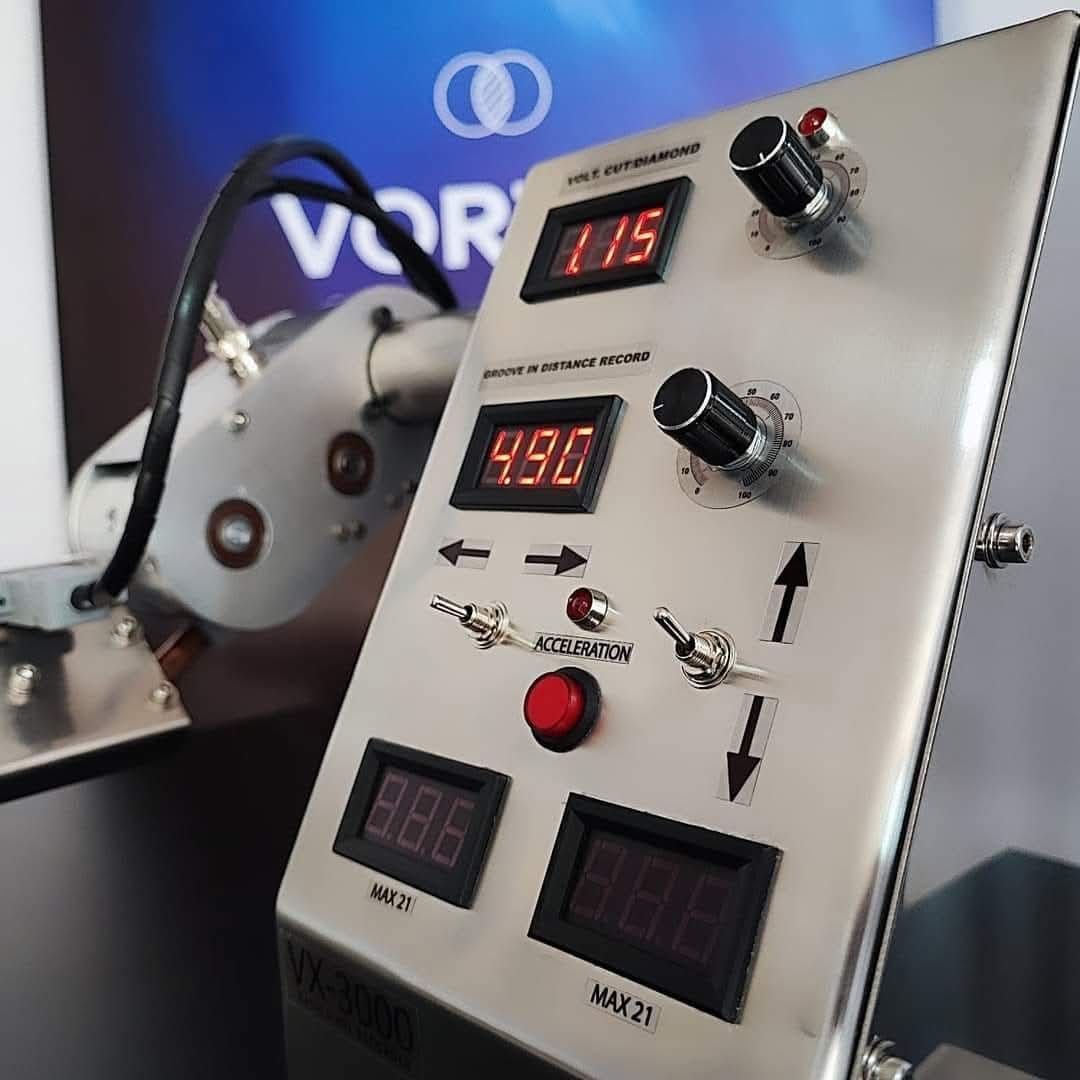
VX3000BASIC


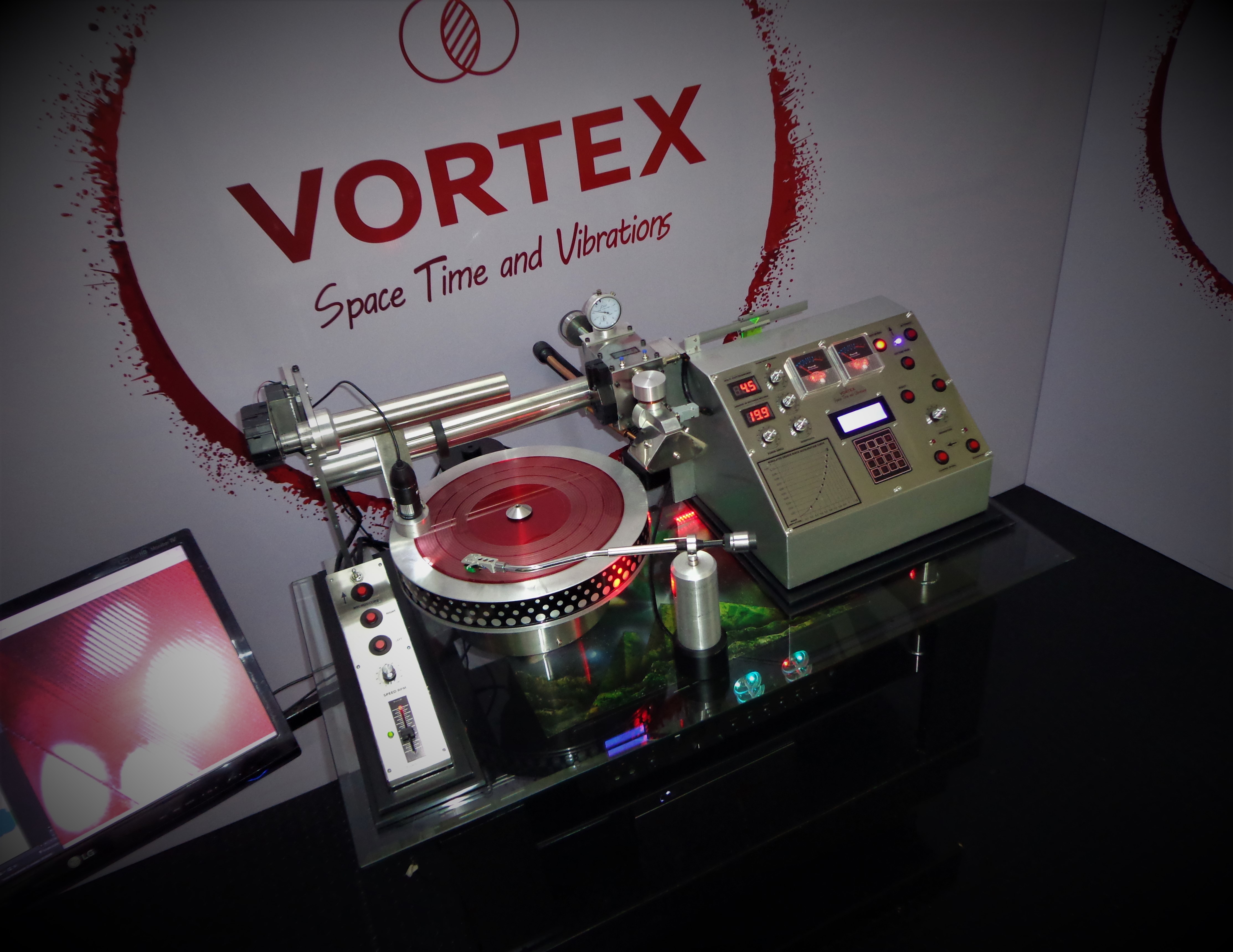
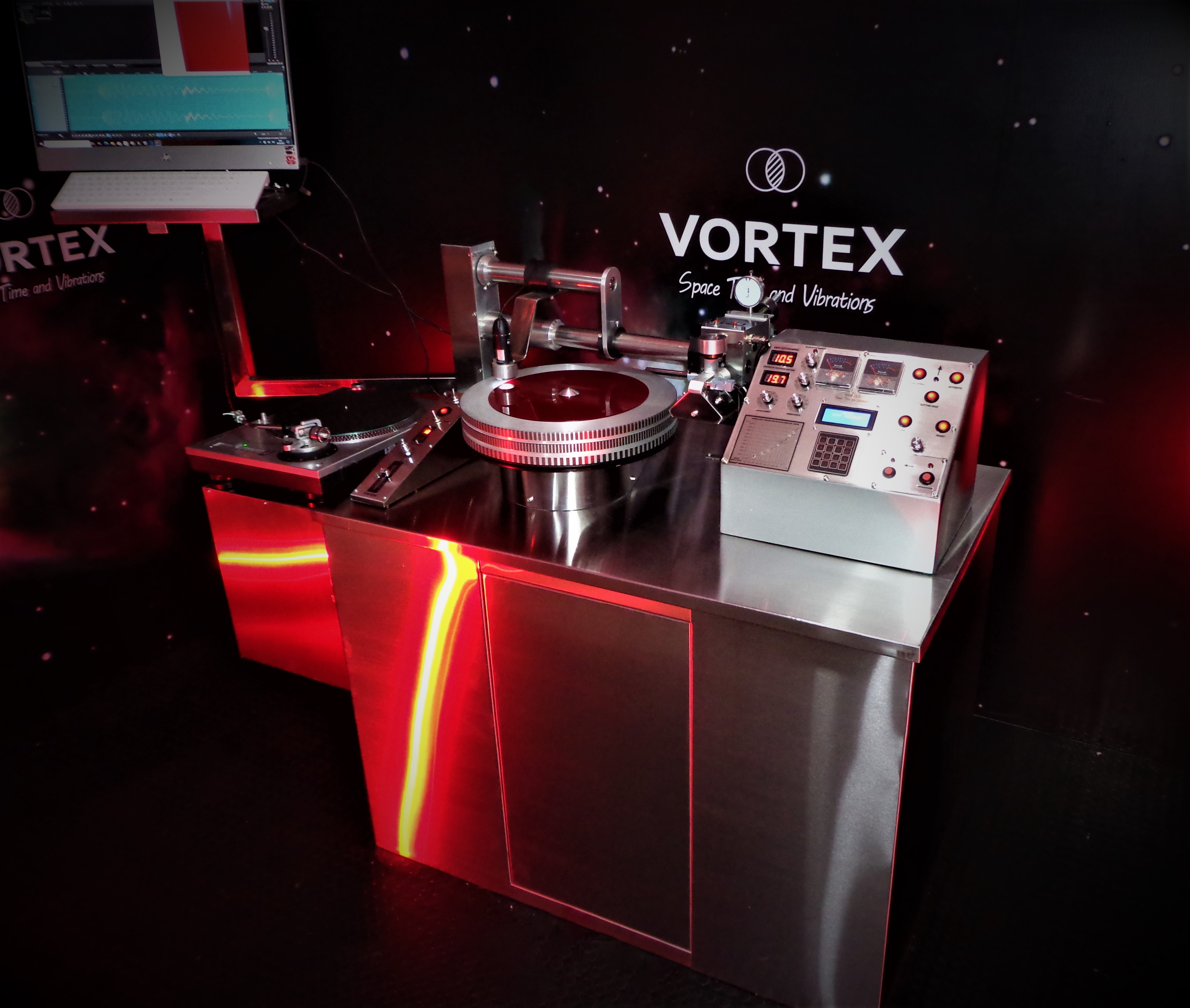
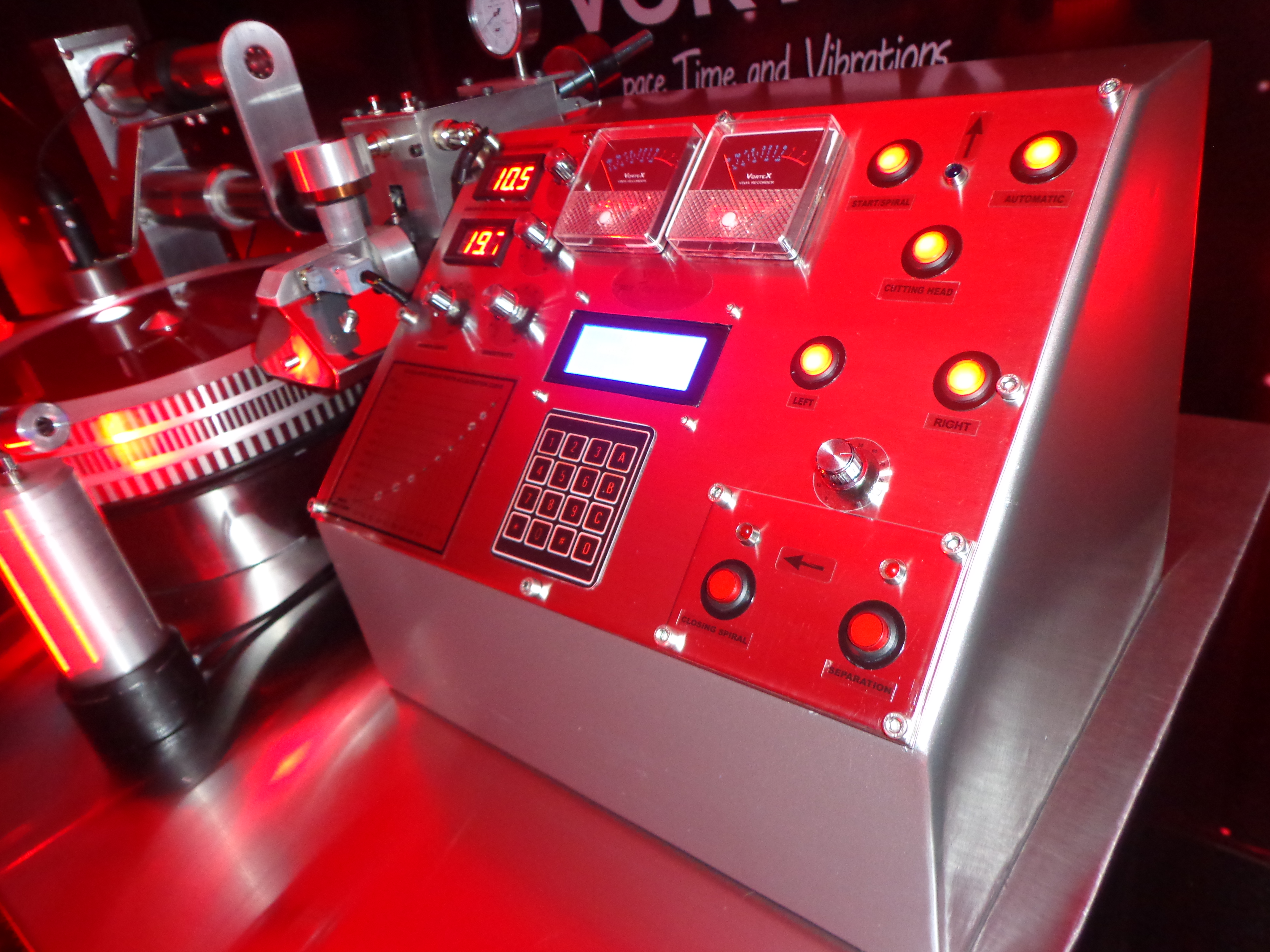
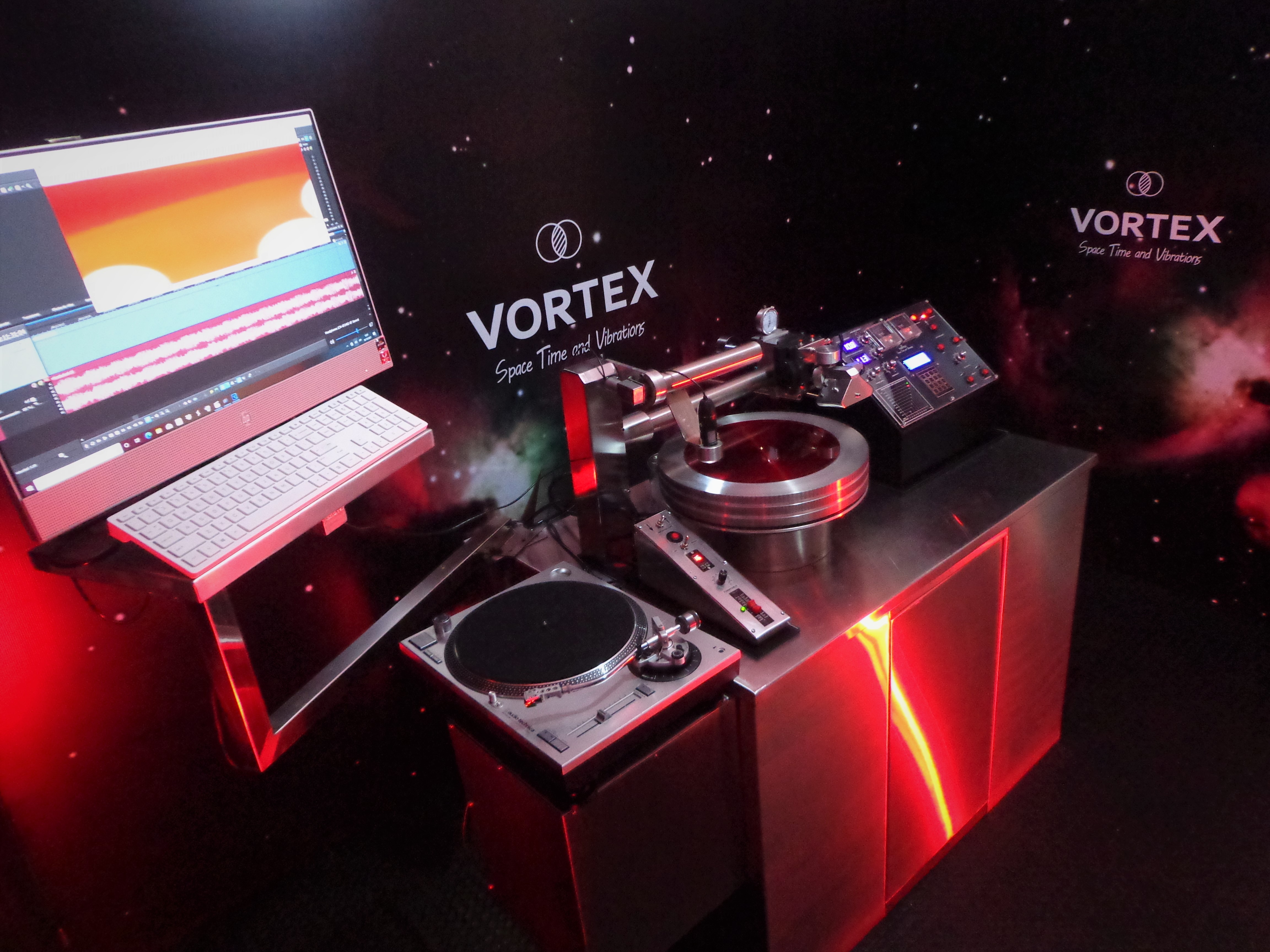
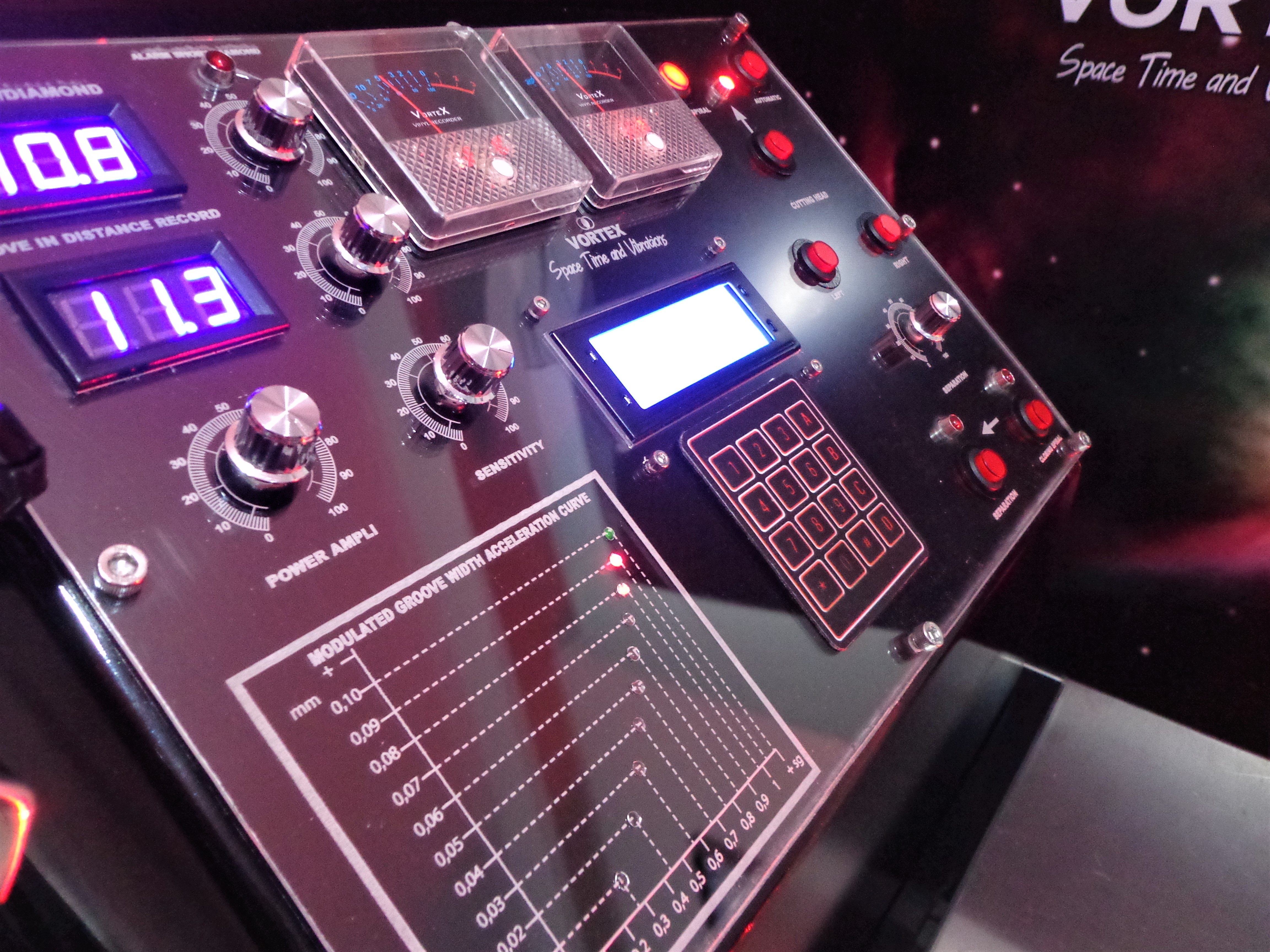
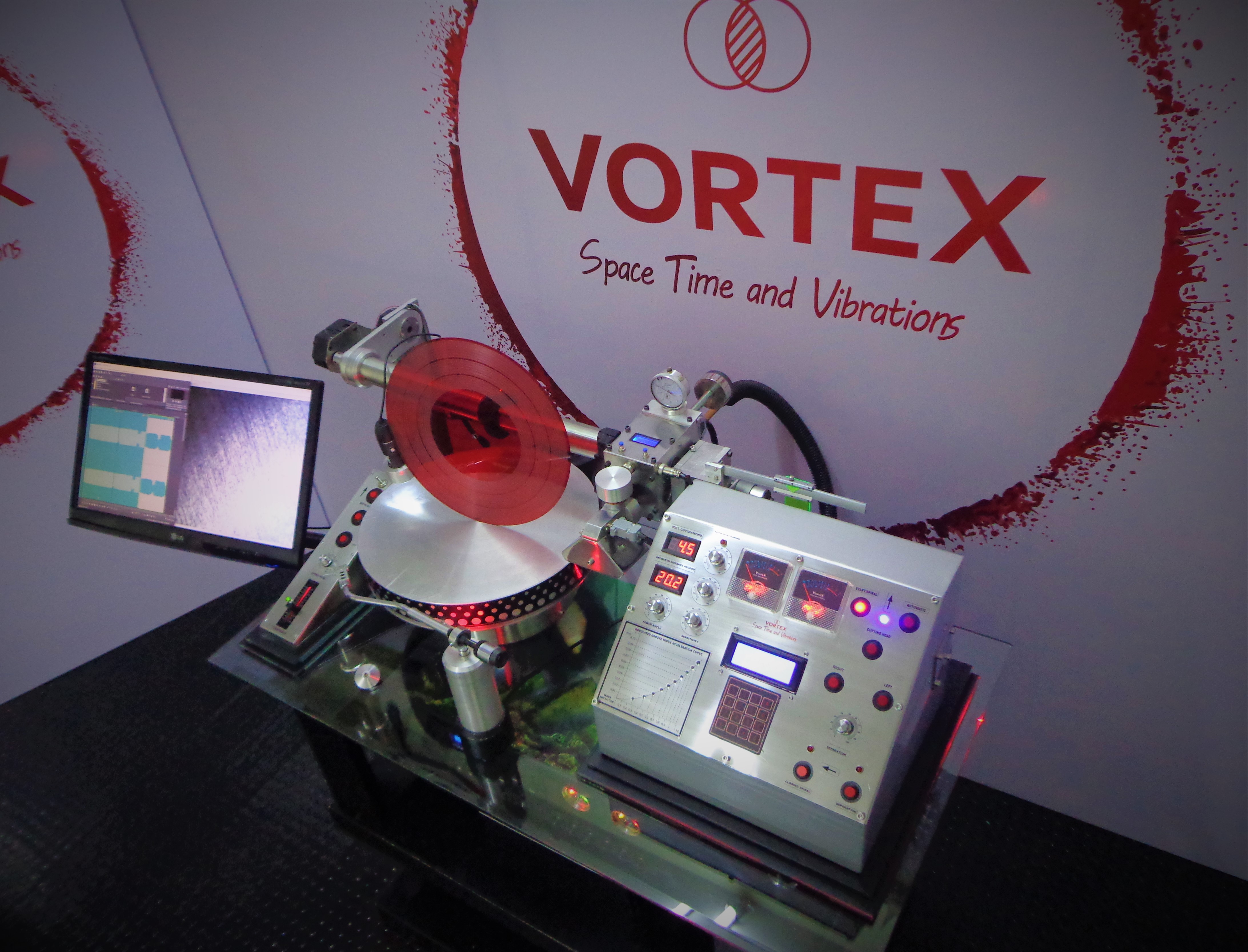

Why aren’t there major audio brands that make these types of machines?
THEORY OF OPERATION ; Recording Mastered Sound – ECUALIZATION R.I.A.A
Let’s clear up the confusion that arises with the term “vinyl recorder,” which is a marketing term. Which can lead some people to believe that all you have to do to create a record is press the “Rec” button. The correct terminology is the technical name of the machine. is the “Vertical Phonograph Lathe,” which cuts master records and write information onto the lacquer (soft surface). With this machine, the master record is manufactured for the electroplating-electrodeposition process, creating the record with positive grooves for pressing. Then, with a pressing disc, mass production of vinyl records begins… This means that a machine capable of creating a record simply by pressing a REC button does not exist, and never has.
To clarify this point, let’s also clarify the terms and meanings of the appropriate words, since due to the misuse of terms and definitions, there is confusion about what is meant by “BURN A DISC” and “CREATE A DISC.”
We’ll replace the term “recording” with the word “creation or manufacture of a phonograph record.” From now on, we’ll use the term “record creation,” since what we’re doing here is creating a record from scratch.
The term “copying machine” or “recorder” refers to replication or copies from a mold, such as a printing press, since the printing press is the only one that produces exact consecutive copies based on a matrix or mold.
To be more precise, let’s go back to the Latin word PHONOGRAPHY, which means “Sound Writing.”
When we refer to a vertical phonograph lathe, it is one that draws or writes sound on a surface using DIRECT CUT MICRO GROOVING. When we talk about “writing,” we are referring to the definition of writing, as if it were freehand drawing.
This is where the knowledge and understanding of a sound engineer or mastering engineer comes into play, as many people are unfamiliar with these types of machines and are accustomed to loading a song or file and pressing the “Rec” button.
To write sound waves of the correct size and shape onto a surface, a technique called audio signal mastering is used. This technique works directly on the electrical audio signal. At this stage, we manipulate, modify, and adapt the electrical audio signal so that the size of the sound wave, which can be several meters high, is only a millimeter or less. So at this point we are going to separate the equipment and the terms: The VERTICAL PHONOGRAPHIC LATHE which micro grooves and writes the sound and on the other hand we have the MASTERING STUDIO where we will have all the analysis, compression and amplification equipment that is inside a recording studio.
On one hand, we have the vertical phonograph lathe (mechanical micro surface grooving machine) and on the other hand we have all the electronic devices to process the sound signal. It is important to understand this since the vertical phonograph environment will cut the surface creating a groove, while drawing the shape of the wave signal that is input to it from the external equipment, regardless of its size/power and shape, without any limitation or sensitivity. The phonograph lathe draws the waveform that is input to the L, R coils the same shape of the sound signal wave that is sent to it from the original sound source.
Managing and operating all audio signal processing equipment in an analog/digital recording studio—such as tube amplifiers, open-back tape compressors, synthesizers, analyzers, equalizers, and high-end signal optimization equipment—requires independent study and experience in mastering and sound engineering.
Strictly speaking, operating and managing a phonograph vertical cutting lathe (microgroover) also requires specific training and knowledge of mechanical cutting techniques, material removal with tool patterns, or groove pattern creation with a knife-type tool.
Clarifying and separating these two terminologies, it can be observed that the master record cutting engineer must have both MECHANICAL knowledge of the handling and operation of a vertical phonograph lathe (micro groover) and the handling and operation of all the electronic equipment in an audio studio for sound mastering..
Many people think they know a lot about sound. However, the only thing they know is to press button Rec°, Play°, and SYNC°,Paste file………..
In this day and age where technology and software have replaced much of the work of human beings, the touch of human artistic work has been lost, there are people who want to buy a vertical phonograph lathe to create vinyl records and still want to simply press a REC button…
So a vinyl record is where all the knowledge, art and work of the creator of the record is captured, which is what gives it an unmatched value where the artist’s music makes sense.
That is why a vinyl record is expensive because a lot of knowledge, a lot of money and a lot of work was spent to create that vinyl record.
That is why great sound mastering engineers offer artists vinyl record production, because this is how all the work and art of music makes sense.
So if you want to give true economic and sentimental value to your work or artistic production, you must have sound mastering and writing.
It could be said that in the mastering of a vinyl record we see the lyrics and pulse of the producer and the cutting engineer.
So that’s why I say “It’s not pressing Rec°, it’s called The Art of Writing Sound.” Art that involves science.
Jonathan Mejia
There is no machine that can create a top-quality disc “just by pressing a REC° button”
This isn’t just pressing a REC° button. When an unmastered song is sent directly to the cutting head of a vinyl record player, the resulting sine wave written on the surface will be completely distorted, and the frequency levels will be completely unbalanced. That’s where the famous “Master Cutting Engineer”—the “Mastering Engineer”—comes into play. Who is in charge of mastering the songs so that the sound wave is drawn microscopically and stably on the surface of the Master Lacquers? (Clearly, a job not just anyone can do.) So what does the machine do? It draws the waveform of any audio signal injected into it physically and microscopically without limitations, as if it were a pencil drawing on a sheet of paper. This would be a superficial example, but the machine does it microscopically within a spiral, and that is the most complex work that VORTEX machines perform. However, on VORTEX machines, the machine’s operating controls are simple and convenient, ensuring a smooth cut within the groove. VORTEX even features automatic mechanical operating systems to assist the operator. Perhaps the most difficult aspect for some is the “understanding of the working technique,” which many people fail to grasp.
Recording an DISC by simply pressing the REC button. Well, the machine doesn’t work that way; in fact, no machine does.
If so, where does the work and talent of the sound engineer lie when creating a record?.
For example, the working technique we use is called MICROGROOVING, which stands for “MODELLED MATERIAL REMOVAL” to obtain a rough cut.
This is technically what the machine does, physically writing the sound waveform; as they say, we draw the frequency as if it were on a sheet of paper. In the second stage, “song mastering” takes place, where the electrical audio signal is processed and then fed to the coils where the chisel creates the “SPIRAL LINE TONE.” The L and R coils of the cutting head modulate the shape of the sound wave drawn on the plastic surface as if it were drawn in pencil on a sheet of paper.
Song mastering is the job of the operator (who is in charge of working on the audio signal before cutting), the master cutting engineer, the famous master cutting engineer we always hear about at the big million-dollar record labels like EMI, Sony, RCA, VICTOR, Warner, etc. Those who had recording studios and the appropriate sound equipment chain to optimize the signal before entering the reels of the cutting head of the vertical phonograph lathe.
These mass-produced vinyl record factories were staffed with mastering engineers.
The confusion among some interested in this equipment lies in the handling of the concept of the “recording word,” as this is not just about using computer programs and theoretical concepts.
Here we are drawing (writing) sound physically and microscopically on a surface. Sound writing = Phono-Graphics
Jonathan Mejía-VorteX THE ART OF WRITING SOUND
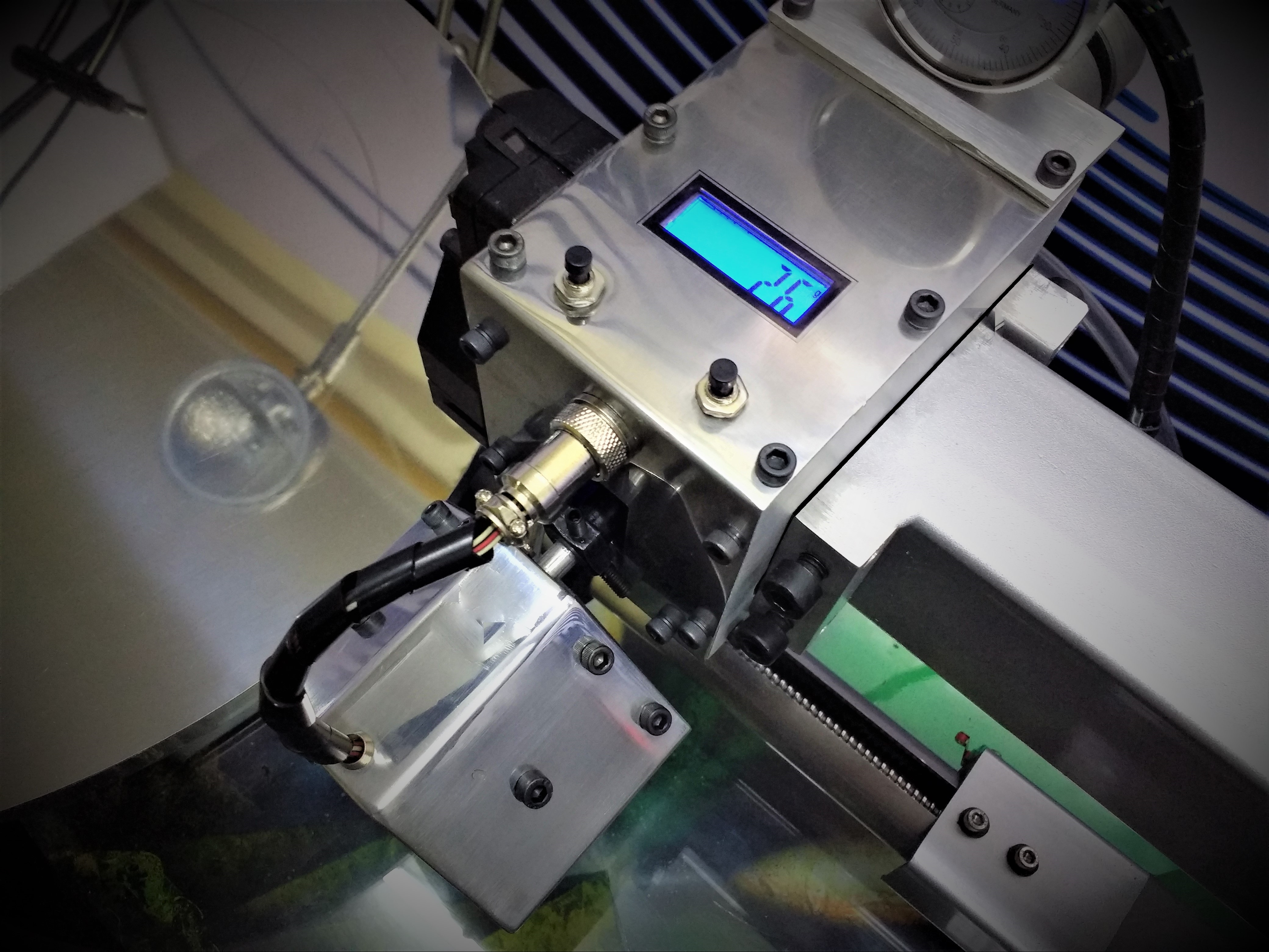
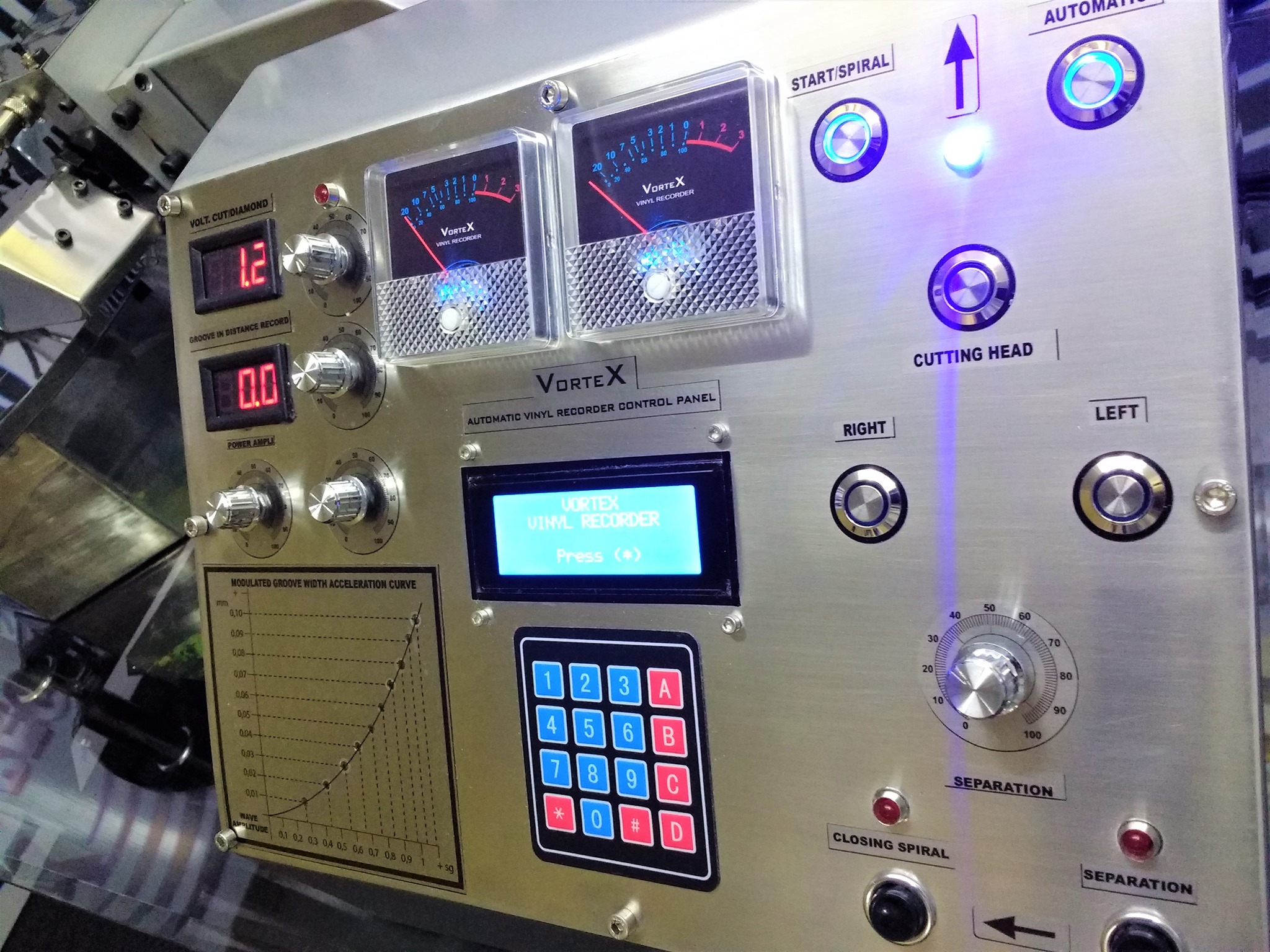

Don’t depend on suppliers anymore, do it yourself!!
Acquire the machines along with the complete package INCLUDES INTENSIVE IN-PERSON COURSES IN DELIVERY AND INSTALLATION
Machines
1° Vertical Phonographic Recording Lathe – COMPLETE EQUIPMENT
MODEL: C6-v4 ‘- MODEL: C7 ALL IN ONE
2° Masters Lacquers, acetates manufacturing machine + VX300 CHEMICAL FORMULA
In-person courses with machines
1° Manufacturing of PVC plastic discs (BLANK DISCS) EXISTING METHODS
Logistics and production. Manufacturers.
2° Manufacture of diamond cutting pencil, production systems and logistics, manufacturers.
3° Cutting diamond temperature filament winding
4° Phonograph cutter heads, Drivers, manufacturers
5° Mass production of vinyl records (Manufacturing of the Hydraulic press, Molds, Electroplating- Electrodeposition)
6° The world market, natural sound and frequencies.
7° DMM System, RECORDING ON COPPER DISC
8° Management and operation of the machines
9° Audio mastering – sound interpretation.
Delivery of the machine in your hands along with all the knowledge, installed and working you will learn to make your own cutting diamonds and blank discs,
VorteX Vinyl Recorder
About us
We are a company dedicated to the manufacture and development of Vinyl Recorders Automatic
We offer a wide variety of vinyl recorder models fully developed by Jonathan Mejia team.
We are the first to offer equipment
fully automated recording of vinyl records, thanks to the development of our own electronic mechanisms and software.
Vortex Technology
Record your own vinyl records
 LATHES PHONOGRAPHICS RECORDERS